

On October 9, 2025, the 9th Academic Symposium of the International Alliance for the Study of Silk Road Textiles (IASSRT) was grandly held at the University of California, Berkeley. The conference was jointly organized by the Tang Center for Silk Road Studies, the Center for Southeast Asia Studies, and the Tracing Patterns Foundation at UC Berkeley, attracting nearly a hundred scholars from around the world engaged in Silk Road and related textile research. The opening ceremony took place at 9:00 AM in Sutardja Dai Hall on the Berkeley campus.
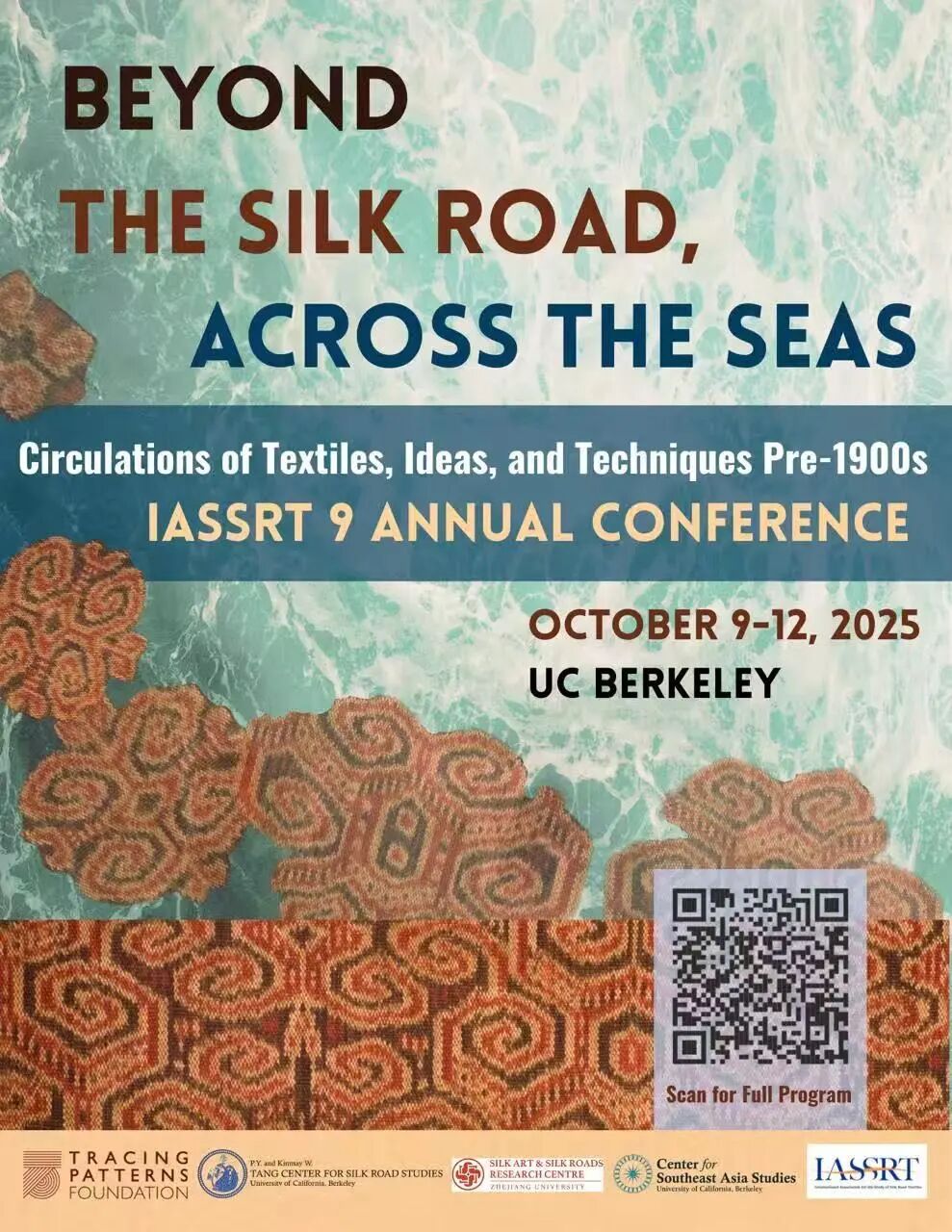
At the opening ceremony, Sanjyot Mehendale, Director of the Tang Center for Silk Road Studies, delivered a welcome speech. She shared the center’s vision for hosting the conference and introduced its theme: “Beyond the Silk Road, Across the Seas: Circulations of Textiles, Ideas, and Techniques Pre-1900s.” She noted that this year’s symposium adopts a Pacific Rim perspective to explore the dissemination and exchange of along the Maritime Silk Road, reflecting the globalization and interdisciplinary trends in silk research. She also expressed intentions to collaborate with Zhejiang University’s Center for Silk Art and Silk Road Culture and the UNESCO Chair on Silk Roads Heritage.
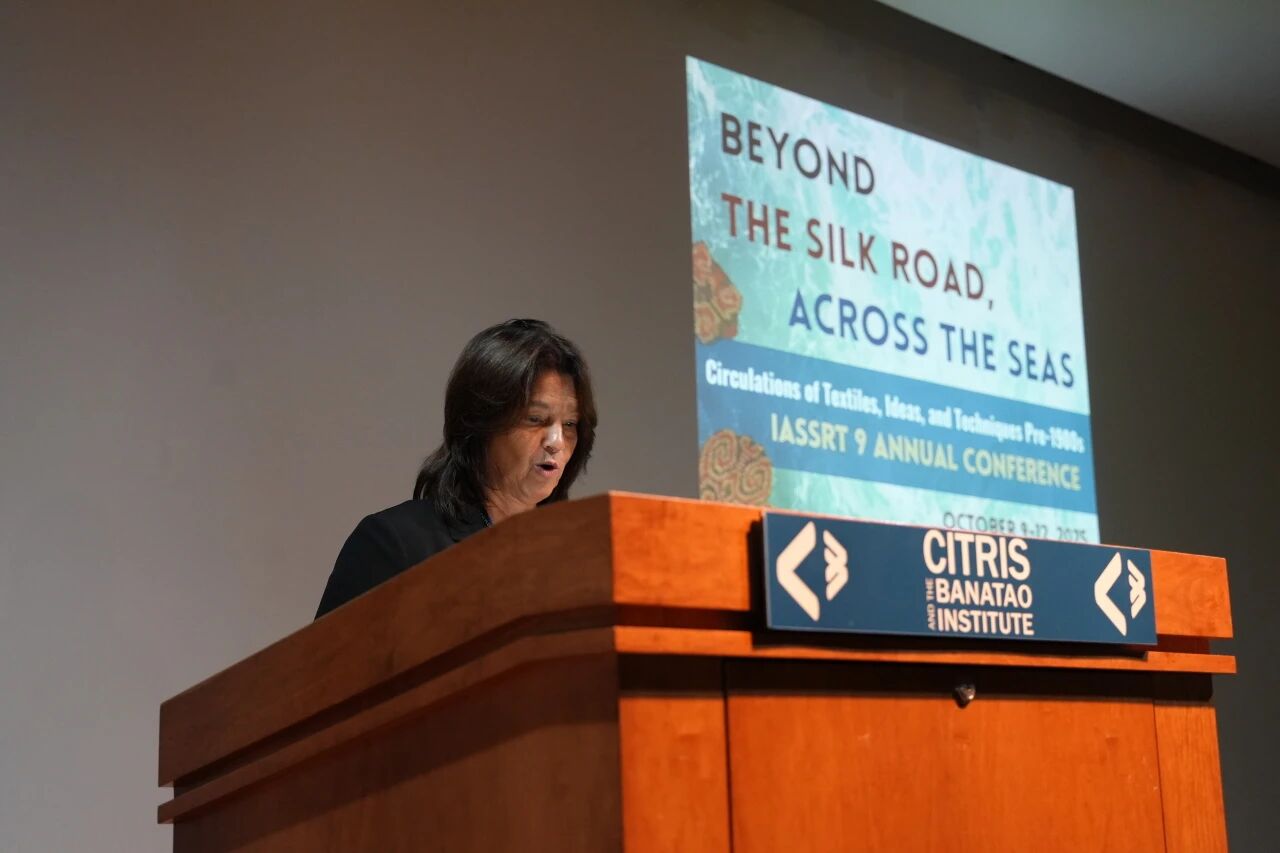
Sanjyot Mehendale, Director of the Tang Center for Silk Road Studies, delivers the welcome speech.
Zhao Feng, Chair of the IASSRT and Qiushi Distinguished Professor at Zhejiang University, addressed the audience during the opening ceremony. He reviewed the alliance’s development since its founding in 2015, highlighting that this year marks its 10th anniversary. He emphasized the special significance of holding the conference across the ocean in the United and praised its rich academic content, featuring over 30 selected papers from scholars across three continents, including the U.S., Mexico, the U.K., France, Russia, South Korea, India, Indonesia, Uzbekistan, Myanmar, and China. This diversity, he noted, underscores the international academic community’s vibrant exchanges and deepening engagement in Silk Road research. Professor Zhao also extended sincere gratitude to UC Berkeley’s Tang Center for Silk Road Studies and the Tracing Patterns Foundation for their meticulous preparations.
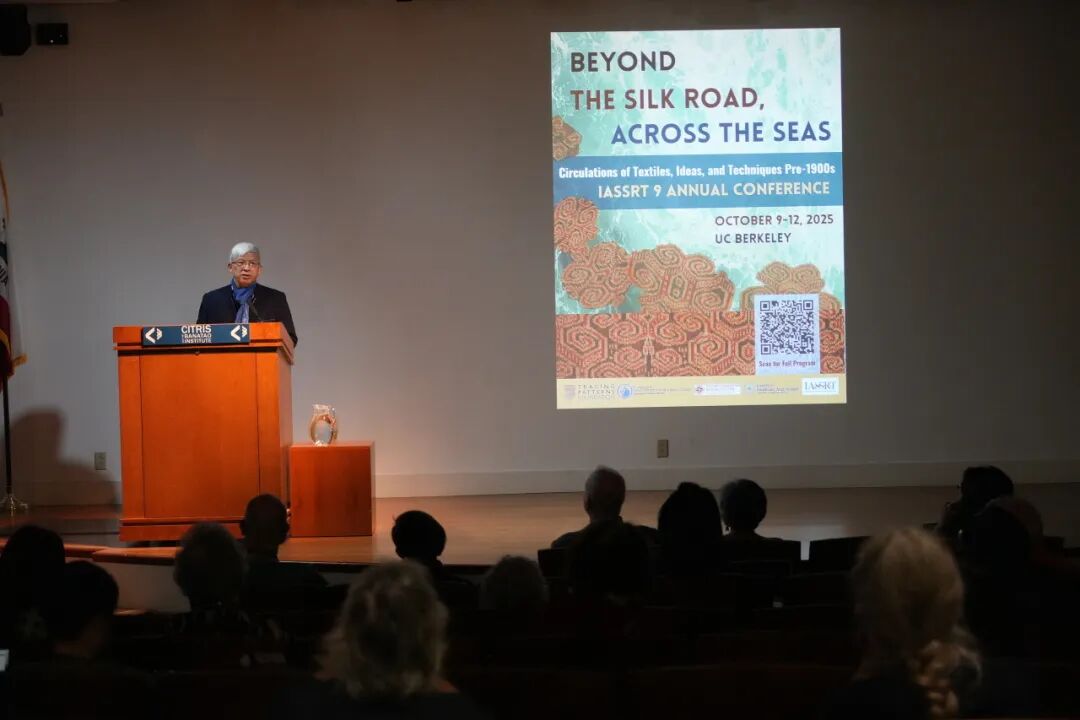
Zhao Feng, Chair of the IASSRT, delivers his speech.
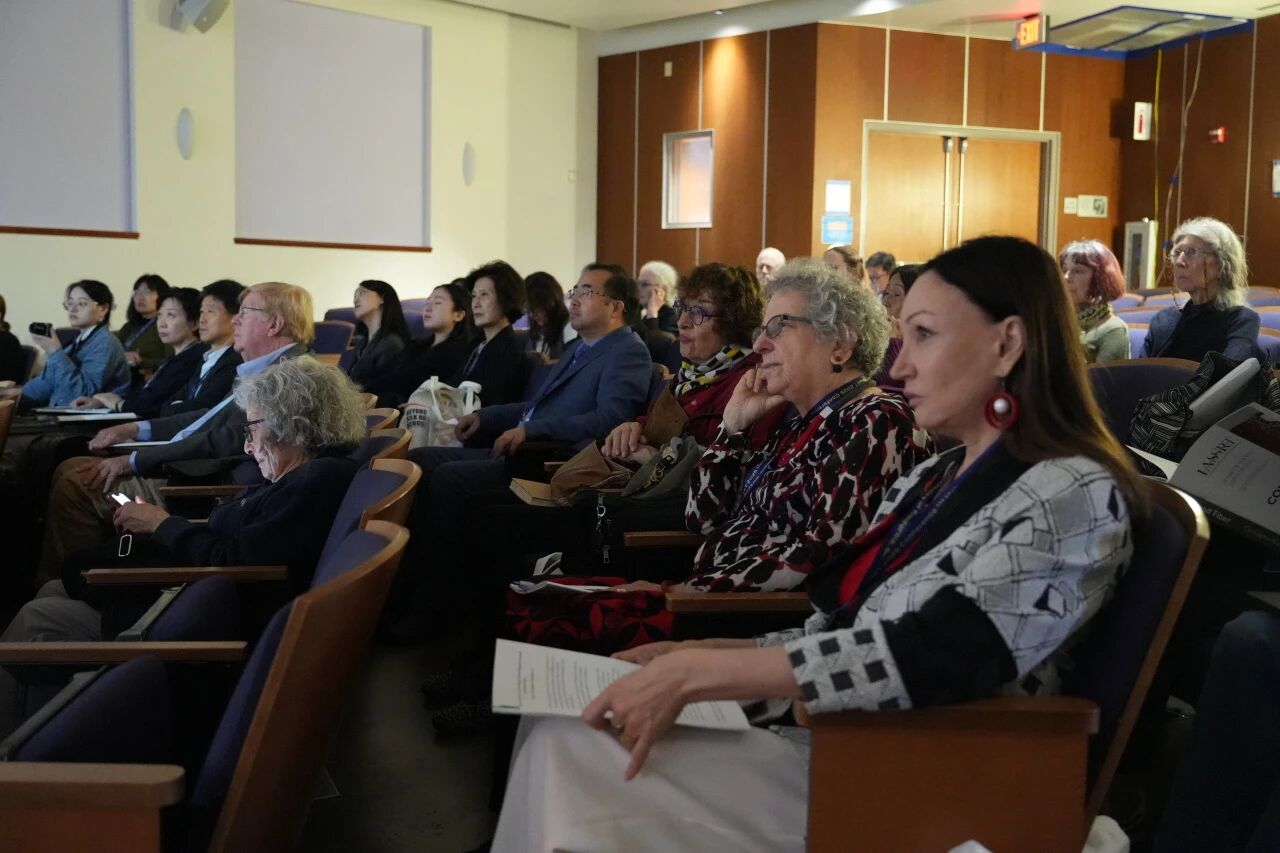
The three-day conference includes four keynote lectures and multiple thematic sessions. Following the opening ceremony, Lee Talbot, Seniorator at The George Washington University Museum and The Textile Museum, delivered the first keynote lecture, titled “Ikat along the Pacific Rim before 1800: Notes on the Possible Origins and Dissemination of a Textile Technique.”
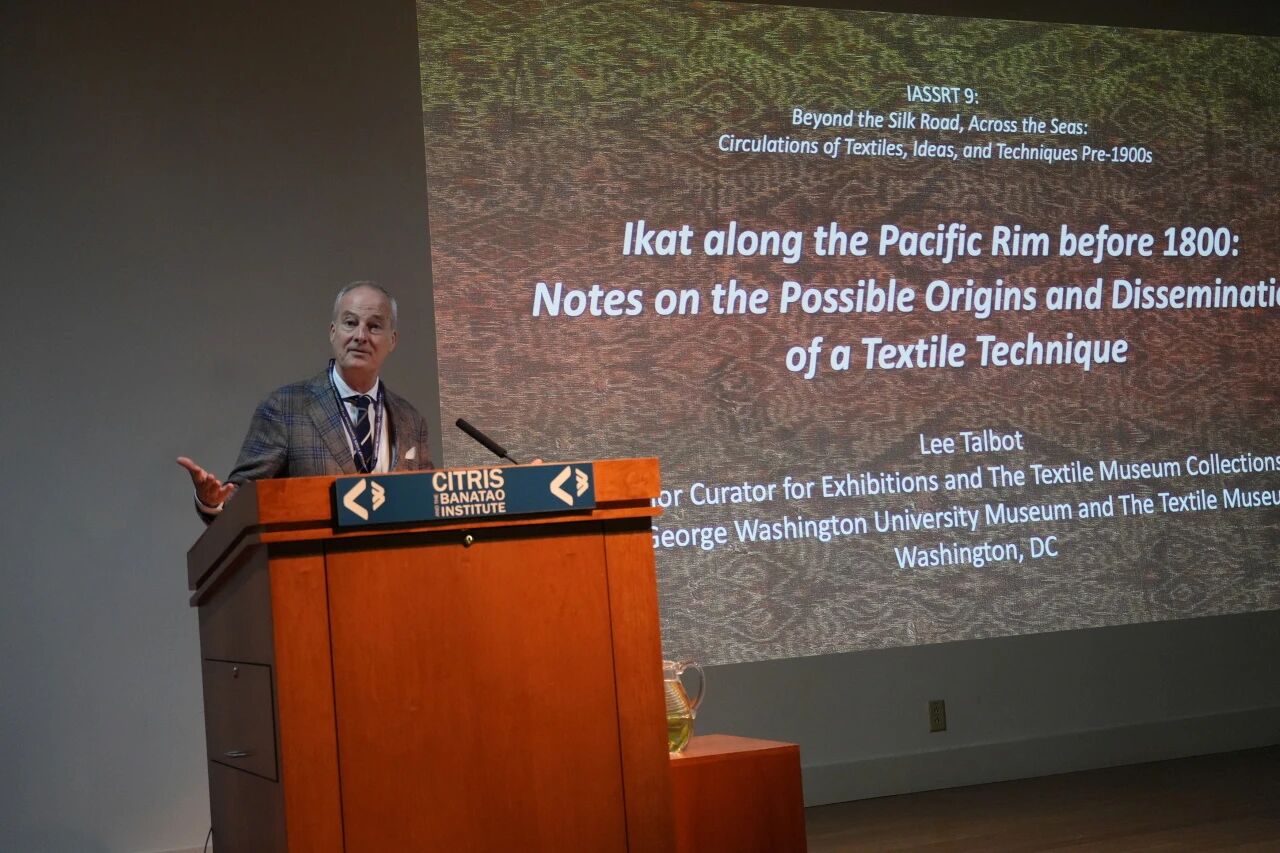
*Lee Talbot, Curator at The George Washington University Museum, delivers the first keynote lecture.*
In his lecture, Talbot explained that Ikat is an ancient resist-dyeing technique where threads are dyed before weaving to create patterns. Despite its ancient origins, the fragility of textiles makes it difficult to trace precise dissemination routes. However, the technique developed independently in multiple regions and eventually spread nearly worldwide. His talk focused on Ikat traditions the Pacific Rim, identifying India and southern China as key origins, while Ikat from Southeast Asia, the Ryukyu Islands, and Japan reflects complex trajectories of cross-cultural exchange. Comparative studies of materials, patterns, and techniques reveal the profound influence of maritime trade and cultural interactions on Ikat’s spread. The lecture sparked lively discussions among, who engaged in in-depth exchanges about Ikat weaving methods, functional uses, and comparisons of techniques in China, India, and South Korea.
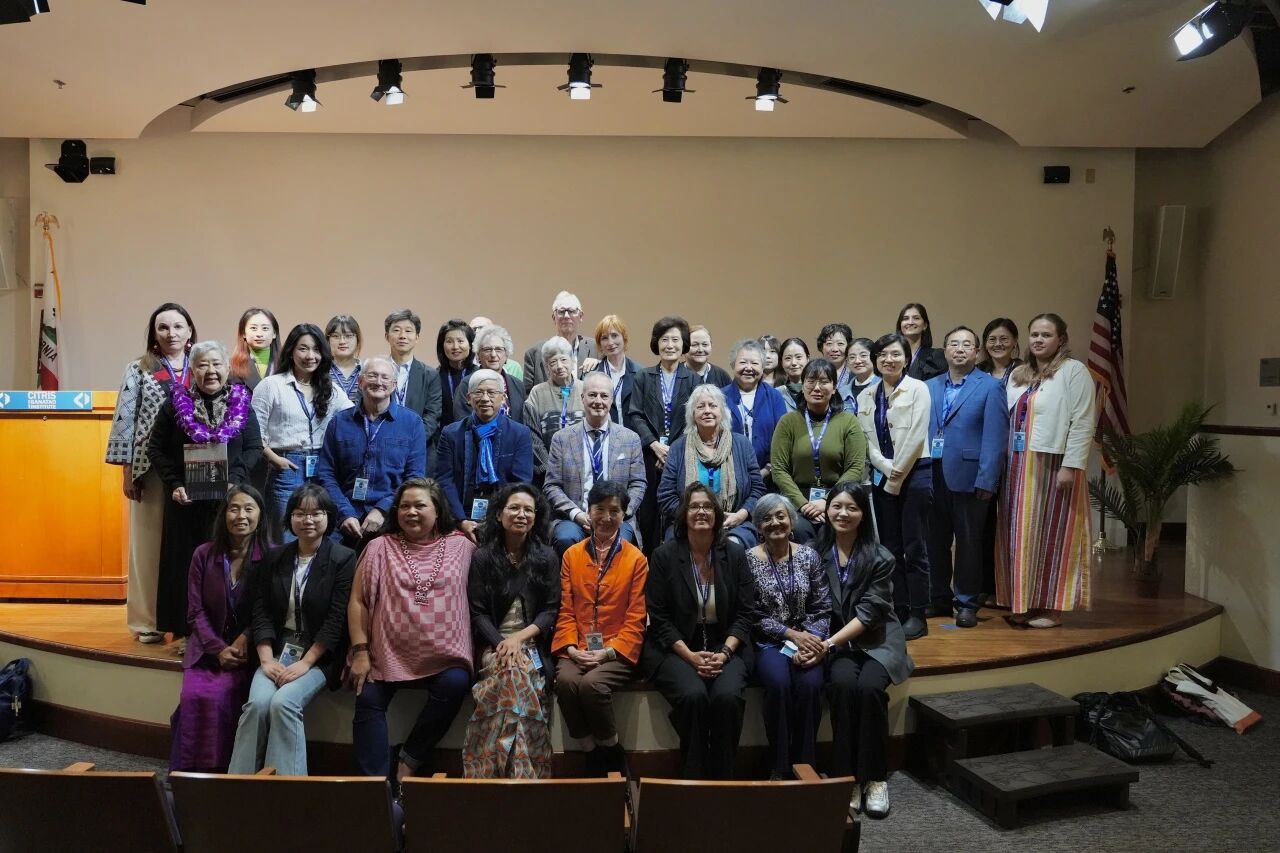
Group photo of speakers and IASSRT council members at the symposium.
After the keynote lecture, the symposium continued with multiple thematic presentations and academic dialogues, showcasing the latest achievements and cutting-edge perspectives international Silk Road textile research.