

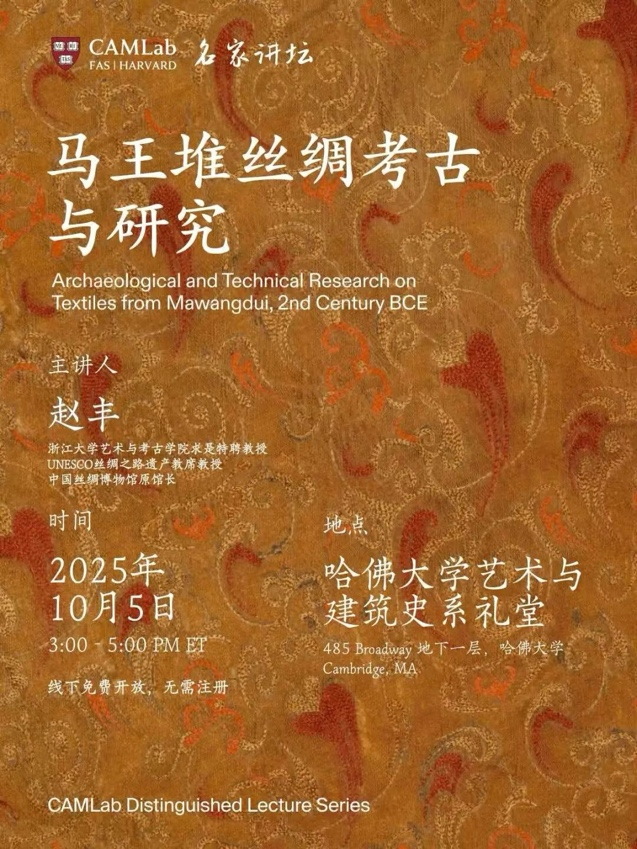
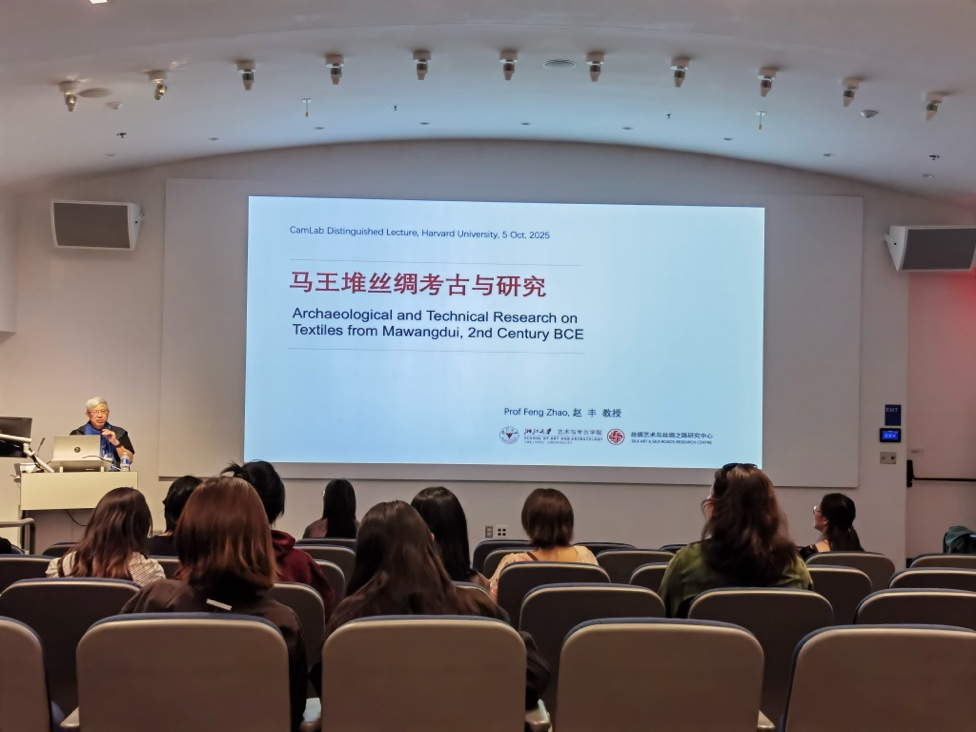
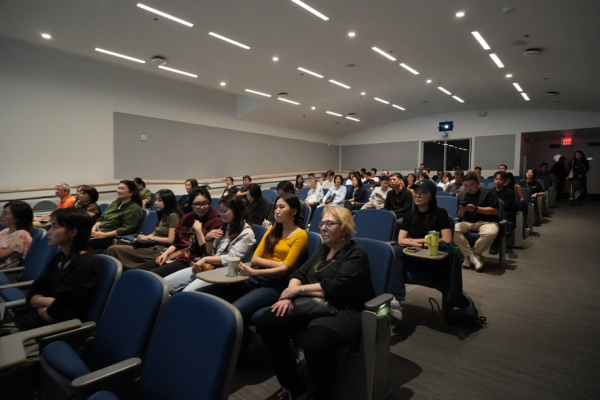
On the afternoon of October 5, 2025, at the invitation of Professor Eugene Y. Wang, founder and director of the China Art Media Lab (CAMLab) at Harvard University, Professor Zhao Feng—Director of the Research Center for Silk Art and Silk Road Culture, and Professor at the School of Art and Archaeology, Zhejiang University—delivered an academic lecture titled "Archaeology and Research on the Silk Artifacts from Mawangdui" at the Auditorium of the Department of the History of Art and Architecture, Harvard University. The lecture was hosted by Lv Chenchen, Deputy Director of CAMLab. During the lecture, Professor Zhao Feng also presented the silk restoration research and cultural and creative achievements conducted by his Chinese colleagues. Over a hundred participants from institutions including Harvard University, Boston University, the Massachusetts Institute of Technology (MIT), Williams College, and the University of Massachusetts (UMass) attended the event.
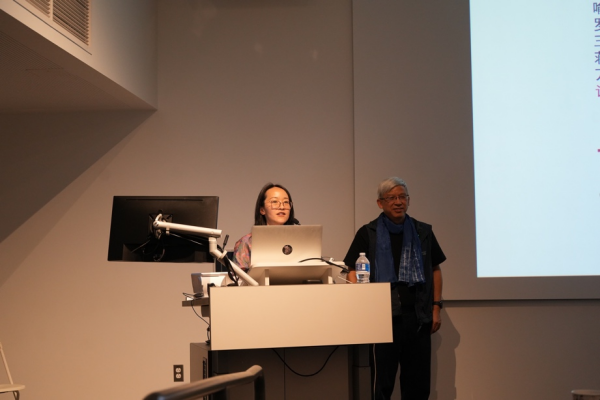
Professor Zhao Feng first reviewed the academic history of the archaeology and research on the textiles from the Mawangdui Han Tombs. Excavated between 1972 and 1974, the No. 1 and No. 3 Mawangdui Tombs yielded a large number of silk artifacts, marking a milestone in the history of Chinese textile archaeology. The extraction and preservation work during the entire archaeological excavation was led by the renowned textile archaeology and conservation expert Mr. Wang Xun, while the post-excavation research on the textiles was symbolized by Mr. Gao Hanyu’s "Research on the Textiles Unearthed from the No. 1 Mawangdui Han Tomb in Changsha", a prominent textile historian. In 2024, coinciding with the 50th anniversary of the discovery of Mawangdui, the Hunan Museum reorganized its collection of over 19,000 silk artifacts, making numerous new findings. Compiled by Yu Yanjiao, Director of the Mawangdui Han Tombs and Collections Research and Exhibition Center, "A Comprehensive Series of Chinese Silk Art · Hunan Museum Volume (Warring States to Han Dynasty)" represents the latest academic achievement in the archaeology and research of Mawangdui silk.
In the lecture, Professor Zhao Feng introduced four types of silk fabrics unearthed from Mawangdui—geometric-patterned warp-faced compound tabby, piled warp-faced compound tabby, "Anle" damask, and cup-patterned complex gauze—and put forward new insights into their weaving techniques.
The first type, geometric-patterned warp-faced compound tabby, is one of the common fabric types at Mawangdui and could be entirely woven using the multi-harness jacquard loom with one hook and multiple heddles from Laoguanshan.
The second type is a large number of scattered geometric-patterned piled warp-faced compound tabby, such as the edges of the plain gauze garment. It was most likely produced by picking techniques on the basis of the plain warp-faced compound tabby, which echoes the possibility of Han Dynasty brocade picking technology proposed by Mr. Xia Nai.
The third type, "Anle" damask, originated from a brown rhombus-patterned damask silk-padded robe woven with the characters "Anle Ruyi Changsou Wuji" (Peace, Good Fortune, Longevity, and Infinity) newly discovered by Yu Yanjiao in the No. 3 Mawangdui Tomb. Through detailed research on relevant fragments, Professor Zhao Feng’s team proposed a pattern restoration plan for "Anle" damask and believed it could be woven by a multi-harness jacquard loom.
The fourth type is cup-patterned complex gauze, a classic four-end twisted gauze. Luo Qun, a research librarian at the China National Silk Museum, conducted restoration research on it many years ago. Currently, it is speculated that such fabrics could also be woven by adding a twisted warp device to a multi-harness jacquard loom.
Professor Zhao Feng pointed out that the research on Mawangdui silk artifacts is not only significant in the history of textile technology but also provides a new technical perspective for the development of Chinese art history. For example, the evolutionary pattern of ice crack and cup patterns, the scattered composition principle formed by scattered geometric patterns, the popularity of horizontal or weft-wise patterns in the Han style, the weaving of characters with auspicious meanings, and the double-layer pattern design like "adding flowers to brocade" all demonstrate the connection between Han Dynasty weaving technology and visual art, and have exerted a profound impact on the popular designs of the same era and the artistic development of later generations. He also proposed that future research on Mawangdui silk could be further carried out in three directions: first, restoration experiments of the original weaving techniques; second, collation of excavation and preservation archives; third, restoration of the clothes worn by Xin Zhui.
In the on-site Q&A session, the audience conducted in-depth and insightful discussions with Professor Zhao Feng on issues such as fabric patterns, dyes, weaving techniques, and the worldview contained in them. Professor Zhao Feng noted that the research on the silk artifacts unearthed from Mawangdui remains popular to this day, with both academic and industrial circles continuously exploring their technological restoration and contemporary transformation. He displayed on-site several restored Mawangdui embroidery and printed works by Professor Jiang Yuqiu’s team from Beijing Institute of Fashion Technology, re-woven cup-patterned gauze and high-density silk produced by Suzhou Ren’er Traditional Clothing Studio, as well as fleece scarves innovatively developed by Cathaya Group based on the cup-patterned gauze technology, vividly presenting the inheritance and innovative practice of ancient silk craftsmanship in contemporary times.
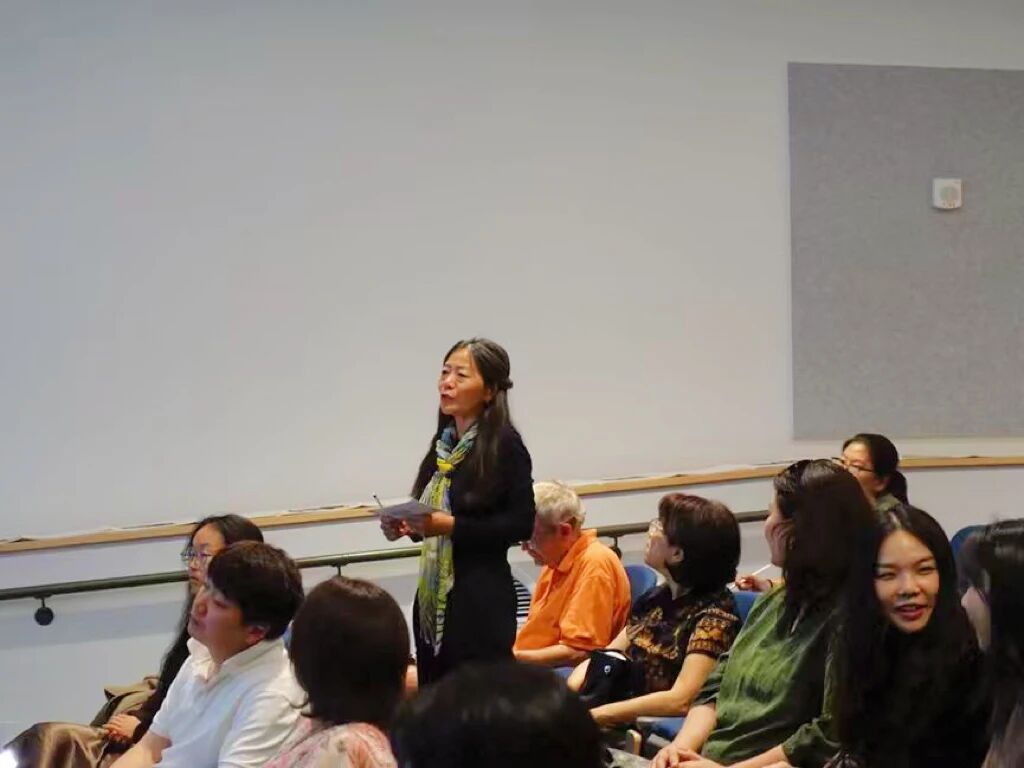
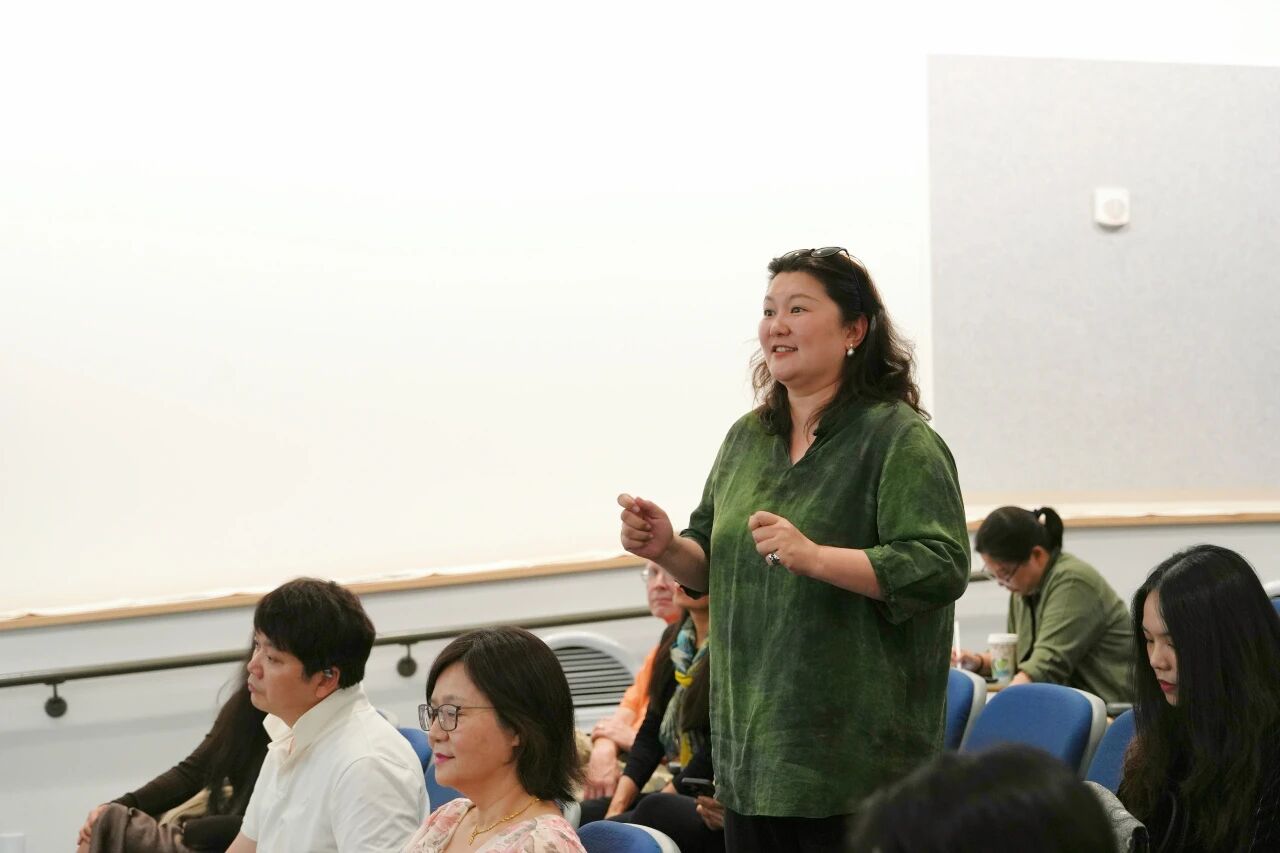
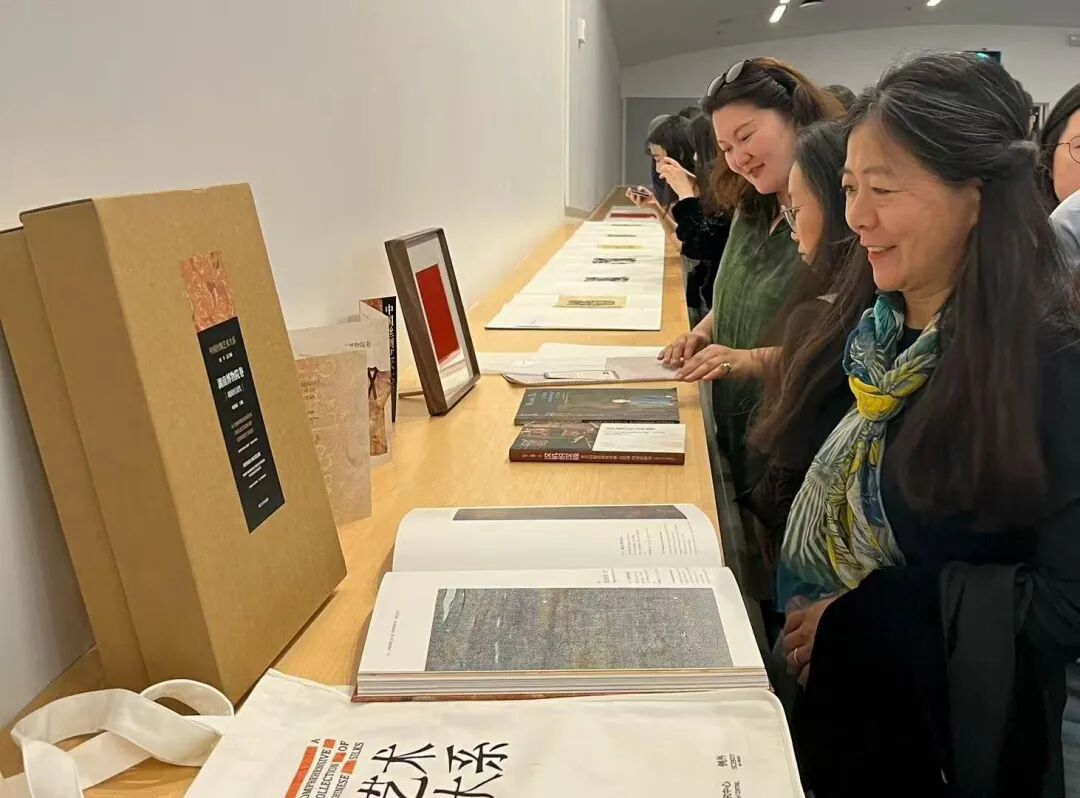
The lecture attracted active participation from audiences inside and outside Harvard University and concluded successfully with enthusiastic exchanges. With solid archaeological research, exquisite analysis of textile history, and a broad academic perspective, Professor Zhao Feng won high praise from the teachers and students present, injecting new vitality into the in-depth development of Mawangdui silk research and the history of ancient Chinese art.
After the lecture, Professor Eugene Y. Wang held a small welcome banquet. At the banquet, Professor Zhao Feng presented "A Comprehensive Series of Chinese Silk Art · Hunan Museum Volume (Warring States to Han Dynasty)", which focuses on the silk artifacts unearthed from Mawangdui, to CAMLab at Harvard University, and conducted in-depth discussions on future cooperation and exchanges between the two parties.